After-hours leads for plumbers and electricians
Why a contact form loses the 9pm emergency, and how four questions with a callback promise turn it into a job you can call back first thing.
28 November 2026 · 6 min read
It is nine at night. Water is coming through a kitchen ceiling, or half the sockets in the house have gone dead. The person searching has your website open and their phone in the other hand. Your phone is off, because you finished at six and you have a family.
What happens next decides whether that after-hours lead becomes your job. Most trade websites offer two options: a number that rings out, or a contact form that says "we will get back to you". Both feel like a dead end to someone with a problem right now, so they go back to the search results and try the next name. This guide covers the alternative: four short questions that end with a clear promise, so the customer stops searching and you start the morning with the job already described.
Why the phone number and the contact form both lose
A phone number only works when someone answers it. After hours it becomes a voicemail, and people with an emergency rarely leave one. They want to know someone is coming.
A contact form fails for a different reason. It asks the customer to write, and people under stress write very little. "Leak, please call" is a typical message. It gives you no idea whether it is a dripping tap or a burst pipe, where the property is, or whether they own it. You call back to ask the questions you could have asked on the page, and by then they may have booked someone else.
The fix is not a chatbot or an answering service. It is a form that asks the right questions in the right order and then tells the customer exactly what happens next.
The callback promise
The single most useful line on an after-hours form is a promise you can keep. The local booking template ships with this one:
We call you back within 30 minutes in opening hours, or by 9:00 the next morning.
Change it to whatever is true for you. "We call emergencies back by 7:30" works if you start early. "We reply to every request the same day" works if you do. The point is that the customer leaves knowing when they will hear from you, which is usually enough to stop them ringing three other firms.
Keep the promise honest. Missing it once costs more trust than not making it at all.
The four questions
The first three questions take one tap each. Typing is saved for the end.
- What do you need help with? A leak or no water, heating or boiler, electrics or lights, or a new installation. Add your own options if you also clear drains or fit EV chargers, and give each one an icon: on a phone at night, people recognise a tap or a light bulb faster than they read.
- How soon do you need someone? This week, in the next two weeks, this month, or just looking for now. This one answer splits emergencies from planned work and decides which result they see.
- What matters most? Price, availability, experience and reviews, or location. You learn how to open the call before you dial.
- Anything we should know? An optional note, then name, email and phone. In the trades presets the phone number is required, because a callback without a number is not a callback.
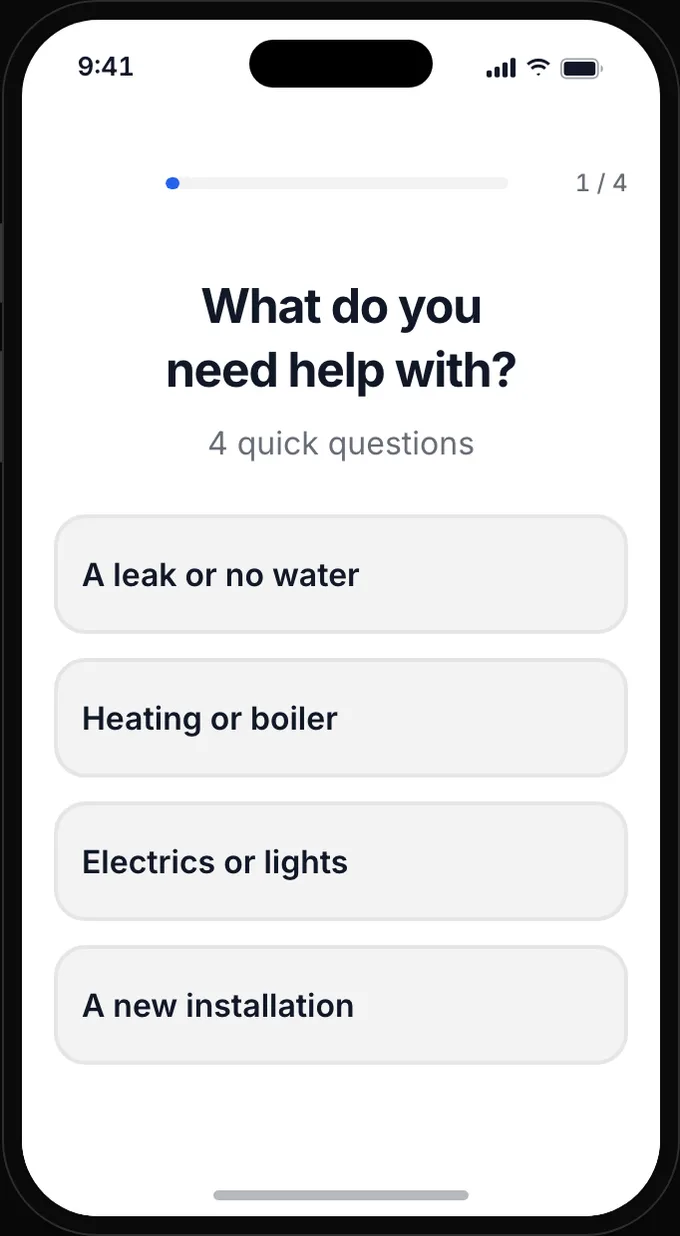 The first question in the trades preset. One tap, no typing.
If you only cover certain areas, add a question listing your towns plus "Somewhere else". Send that last answer to a result that politely says you do not cover the area. You only get the leads you can take.
Two paths, two results
The emergency path. Anyone who picks "this week" sees the callback promise and a button to call you, one tap away. You can add a rule so a leak or no water always takes this path, whatever the timing answer.
Add one line on what to do while they wait, as long as it is safe advice you would give on the phone anyway. For a leak, where to find the stop tap and which way to turn it (Thames Water's guide lists the usual places, like under the kitchen sink or in an airing cupboard). For electrics, switching off at the consumer unit only if they can do so safely, and never touching anything wet. It helps the customer, and it shows them you know what you are doing before you have said a word.
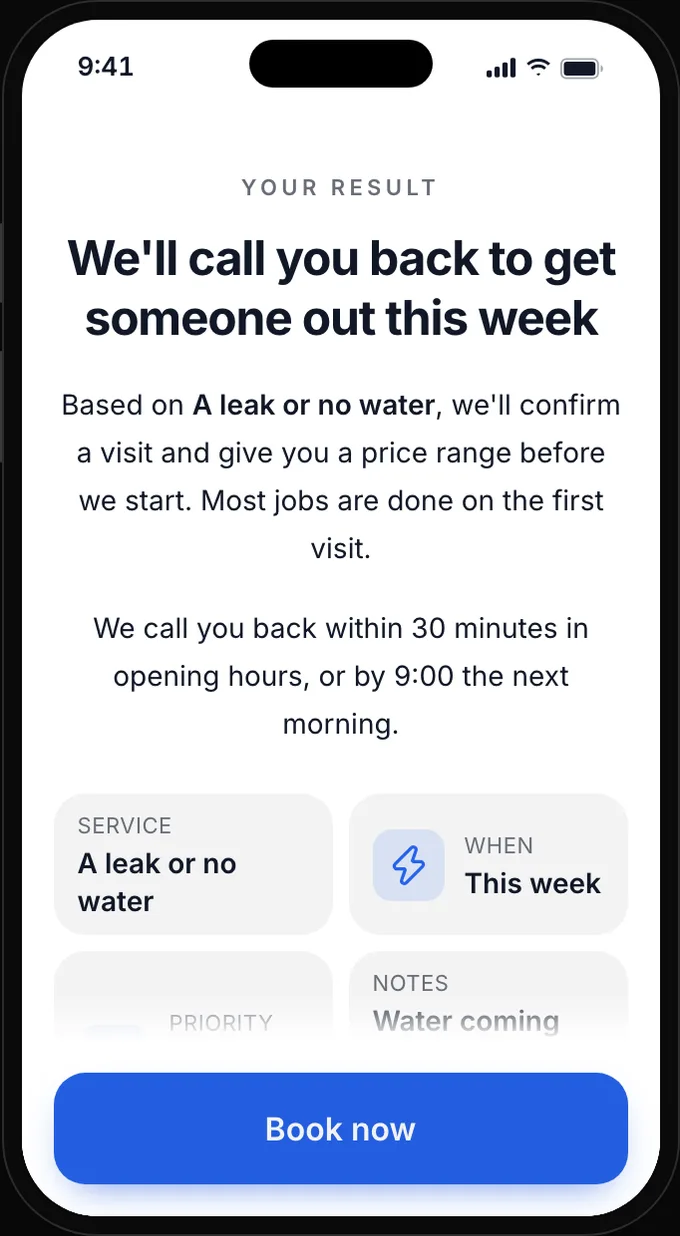 The urgent result after "A leak or no water" and "This week". The promise and the customer's answers sit on one screen.
The planned path. A new boiler, a rewire, an extra socket in the garage. These customers are comparing quotes, so their result is a quote request with the details already filled in. If you take bookings for surveys, paste your Calendly or Cal.com link and the result shows it as the main button.
Questions worth adding for trades
The preset is a starting point. These additions pay for themselves:
- What have you already tried? "Reset the boiler twice" or "the trip switch will not stay up" saves the first ten minutes of the visit.
- Do you own or rent? Tenants often need the landlord's agreement before work starts. Knowing now saves a wasted trip.
- Boiler make and model. For heating jobs, so the right parts are in the van on the first visit.
Your reply email can also ask for a photo of the leak or the boiler label. People are happy to send one once they know you are coming.
Putting it on your website
Most trade sites run on WordPress, Wix or Squarespace, often built by a freelancer years ago. You do not need them to rebuild anything. The quiz goes on with one script tag, pasted where your theme or a header plugin allows it. The WordPress install guide walks through it with WPCode, and there are guides for Wix and Squarespace too.
Two placements work well:
- A popup on the contact page, opened from a "Get help now" button next to your phone number.
- Inline on each service page, so someone reading about boiler repairs can start without leaving the page.
A hosted link also works without any embed, which is handy for your Google Business Profile or a van sign QR code.
The morning routine
Every lead arrives by email with the answers and the phone number. At 7:30 the routine is simple: open the emergencies first, read the problem and the note, and call. You already know what is wrong, where they are and what they care about. The call is two minutes instead of ten, and you can quote a time slot straight away.
Planned jobs can wait until after the first call-outs. Their requests are already in your inbox with everything you need to price them.
A line on privacy
You are collecting names and phone numbers, so say what you will do with them. One line under the form is enough: "We use your details only to reply to this request." If your site has a privacy page, link it. For UK and EU sites this matches what most customers expect, and it is a good habit anywhere.
Before tonight's first emergency
Click through the after-hours lead quiz for plumbers and electricians on your phone, the way a customer with a leak would. If it feels right, the trades preset in the builder reads your website and rewrites the questions and the callback line in your words. Change the promise to one you can keep, add your towns, and put it on the contact page. The local booking template behind it also suits garages and cleaners, and the free plan covers your first leads without a card.